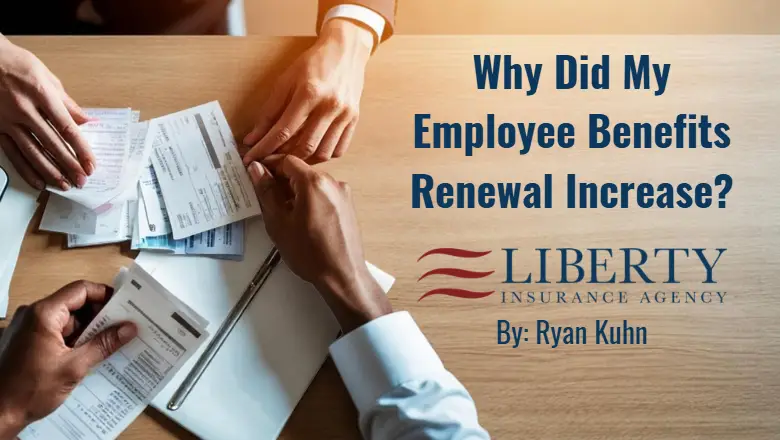
The way I explain it is pretty simple: your renewal is a report card for the last 12 months.
It reflects what happened throughout the year, not just what happened in the few weeks before your renewal date. Claims, prescription drug costs, employee demographics, plan usage and the overall healthcare market can all affect the number you see.
That’s also why I don’t think renewal should be the beginning of the conversation.
If we wait until the report card comes out to figure out how we’re doing, we’ve waited too long.
What Is Actually Driving Your Renewal Increase?
There usually isn’t one single reason.
Medical costs continue to rise. Specialty medications can be expensive. GLP-1 medications have also become a bigger factor for many plans.
Then you have what happened specifically within your employee population.
Maybe you had a few large claims. Maybe your workforce changed. Maybe you hired more employees, your demographics shifted or people simply used the plan differently this year.
For growing companies, size can also change how the plan works.
Once a business moves from under 50 employees to over 50, for example, renewal pricing can become much more dependent on the group’s own claims and demographics. More plan options also become available as the company grows.
That’s why one of the first things I want to know is:
What changed in your business this year?
Tell me that, and I can start telling you what it may mean for your benefits plan.
Renewal Should Never Be a Surprise
One of the biggest mistakes I see is waiting until renewal to start talking about the plan.
At that point, you’re reacting.
I’d rather spend the year watching what’s happening so we have a pretty good idea of what that renewal might look like before it shows up.
That can mean reviewing claims data, looking at pharmacy spending, talking about plan design and comparing your plan to similar employers.
I also like to start benchmarking well ahead of renewal. Ideally, we’re looking at that six to eight months out. Then, four to six months before renewal, we can start looking more closely at claims trends and potential risk areas.
That gives us time.
If you get hit with a big renewal increase 60 days before your renewal date, I want us to already know what levers we can pull.
What Should We Be Looking At During the Year?
When I’m reviewing a benefits plan, I’m not just staring at the renewal number.
I want to understand what’s behind it.
A few of the questions I would be asking include:
- Did we have any unusually large claims?
- Are prescription drug costs increasing?
- Are specialty medications affecting the plan?
- Has the employee population changed?
- Are people using emergency rooms or out-of-network providers more often?
- Has the company grown?
- Does the current plan design still make sense?
- Is the current funding arrangement still the right fit?
- How does the plan compare to other employers of a similar size or industry?
That last part is important.
A 10 percent increase doesn’t mean much by itself if we don’t understand what the rest of the market is doing.
I want context.
Then we can decide whether the issue is the market, your claims, your plan design, your funding structure or some combination of all four.
A Tough Renewal Does Not Always Mean You Just Pay More
This is one area where I think employers sometimes get stuck.
They get a large increase and assume the answer is either to accept it or start cutting benefits.
That is not always the case.
There are more funding options available today than many employers realize.
Depending on the size of the company, claims experience, financial situation and appetite for risk, it may be worth looking at Alternate Funding Options such as level-funded plans, self-funded arrangements or an Individual Coverage Health Reimbursement Arrangement.
I like to explain fully insured versus level-funded coverage with a dinner bill.
With fully insured coverage, it can feel like everybody at the table agrees to split the check evenly. You ordered the salad, but someone else ordered the steak, and you’re still helping pay for the steak.
With level funding, you have more connection to what your own group is actually using.
It isn’t automatically better for every company. But it is worth asking whether your current structure still makes sense.
That’s the bigger point.
The answer to a difficult renewal isn’t always “pay more.” Sometimes it’s “structure this differently.”
Your Benefits Plan Should Change as Your Company Changes
A company with 35 employees and a company with 150 employees should not automatically be using the same benefits strategy.
As your business grows, the rules change. Your employees change. Your options change.
That’s why I tell growing companies not to wait until they cross a major employee threshold before they start planning.
If you’re at 35 or 45 employees and you know you’re growing, we should already be talking about what comes next.
Growth can also bring new reporting and compliance responsibilities. That means health and welfare legislative compliance needs to be part of the conversation, not something we figure out after a deadline is already approaching.
The same is true if you acquire another company, open another location, change your hiring strategy or see a major shift in your workforce.
Your benefits plan should keep up with the business.
Your Employees Affect the Plan Too
Employers make the plan decisions, but employees also influence what happens throughout the year.
Where they receive care matters.
In-network versus out-of-network care can make a difference. So can the decision to use an emergency room instead of an urgent care center when appropriate.
That’s why employee education should not happen once a year during open enrollment.
Employees need to understand how the plan works, where to go for care and what resources are available to them.
They are helping control claims too, whether they realize it or not.
Better education can help employees make smarter decisions, and it can also help the company get more value out of the money it is already spending on benefits.
Start Planning Before You Get the Renewal
One of the most common questions I get is:
When should I start planning for my benefits renewal?
My answer is: well before the renewal arrives.
I don’t want to sit down for the first time 60 days before your effective date and start guessing.
I want to know what’s happening with the plan all year.
I want to know if your business is growing. I want to know if your claims are changing. I want to know if your employees are using the plan differently. I want to know if there’s another funding structure worth considering.
That’s how we turn renewal from an annual emergency into an actual strategy.
And for businesses in Pittsburgh, Western Pennsylvania and beyond, that matters for more than just cost.
Benefits affect recruiting. They affect retention. People will leave one company for another because of benefits.
So yes, the renewal number matters.
But I’m much more interested in what’s behind the number and what we can do about it.
If your renewal is coming up, contact Liberty Insurance Agency. I’d be happy to look at what’s driving the increase, what your plan is telling us and what options may make sense before you make your next decision.
About Ryan Kuhn
Ryan Kuhn works with business owners, HR leaders and finance teams to build employee benefits strategies that make sense for where their company is today and where it’s headed. His approach focuses on year-round planning, funding options and helping employers understand what’s actually driving their benefits costs.
Born and raised in Pittsburgh, Ryan takes a practical, relationship-focused approach to helping employers make more informed benefits decisions.